voice notes
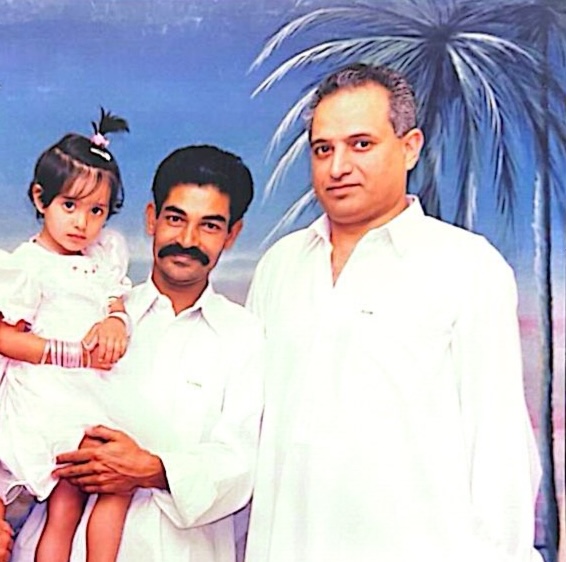
what follows are paired fragments—brief echoes of memory, gestures half-held, and reflections gathered from hours of conversation with Farukh and Habul. these are not dialogues, but resonances: one voice surfaces, the other drifts near. sometimes they overlap in unexpected harmony; sometimes they miss each other entirely. in their uneven correspondence, we hear intimacy not as perfect symmetry, but as the effort to remain tethered across time. the present folds into the past like breath on a cold pane—fleeting, visible, gone. what emerges is not a complete narrative, but the glint of recognition, a momentary warmth before it dissolves.
Archive in Fragments
these voice-notes are splinters from a vast and quiet terrain—hours of breath, memory, and dailiness, distilled into fleeting constellations of sound. they carry only what can be held in a moment: a tremor in the voice, a name said tenderly, the rhythm of recollection. some moments linger— laughter, high pitch, a long inhale before a memory lands—because in this archive, ambiance is evidence, and texture is testimony. I weave their voices with my own, not to overwrite but to witness, to show that listening is also a form of authorship. I am the daughter shaped by these stories long before I began to archive them—the scholar who returns not to explain, but to honor their architecture. no medium, not even this one, can contain the texture of everyday trust, the slow work of love performed across decades. each note is both offering and absence—intimate in its nearness, aching in its brevity. these are not completions. they are fragments that flicker at the edges, leaving behind a shimmer of what once was, and what continues to echo.
1 | “Eighty‑Three Mein Aaya Hoon”
Habul — the threshold of arrival
He steps over 1983 as if it were a doorway, not a date. An interview, a shared meal, a simple “Usko rakho.” What was labor becomes lodgement; what was trial becomes trust. Migration here is not the crossing of borders but the crossing of a kitchen— a cook folded into kin, devotion seasoned with gratitude and prayer. monograph
2 | “He Came Through Jamal”
Farukh — kinship by corridor
Between 84, 22 and 26—Farukh’s voice loops through the arithmetic of youth, a casual sum of ages and beginnings. Care seldom knocks at the front gate; it drifts through side passages—a cousin’s favor, a quiet “yes.” Amid the tallying of years, two men exchange futures in the language of errands, re-writing a house from the inside, rearranging its architecture by the simple fact that someone stayed.
3 | “I Remember This — Lemon Chicken”
Farukh — taste as archive
Flavors stand where photographs fail. Lemon chicken, daal‑chawal, teenday with onions, fish‑head curry— each dish a mnemonic, each spice a timestamp. As my father recites this liturgy of nourishment, I eagerly fill in the pauses: the daughter who ate, the researcher who now listens for theory in fried fish. Together we map an edible archive— his memory plated, my scholarship tasting its way home— love rendered tangible, history still warm on the tongue.
4 | “Nahi Beta, Mein Ghar Pe Kuch Nahi Bana Sakta”
Habul — the inverted kitchen
Now the stove is wood, the gas long gone; the man who once seasoned our childhood does not cannot coax a flame for himself. At home it is his wife who turns the ladle—gender’s old decree— while his children puzzle over recipes tuned to someone else’s tongue. His curries were calibrated to our cravings, not theirs. even taste‑buds carry passports, it seems. Care has migrated, rerouted by class and kinship, yet its ghost lingers on his palate: meals he can no longer cook, but can still recall with aching precision.
5 | “You Can Count the Years”
Farukh — duration made tender
Thirty‑four years rendered in the quiet math of mornings shared. A cook becomes confidant, worker becomes witness, and time itself is seasoned by fidelity. To live beside someone “till your end” is to fold chronology into companionship, proving that devotion is not declared—it is accrued.